


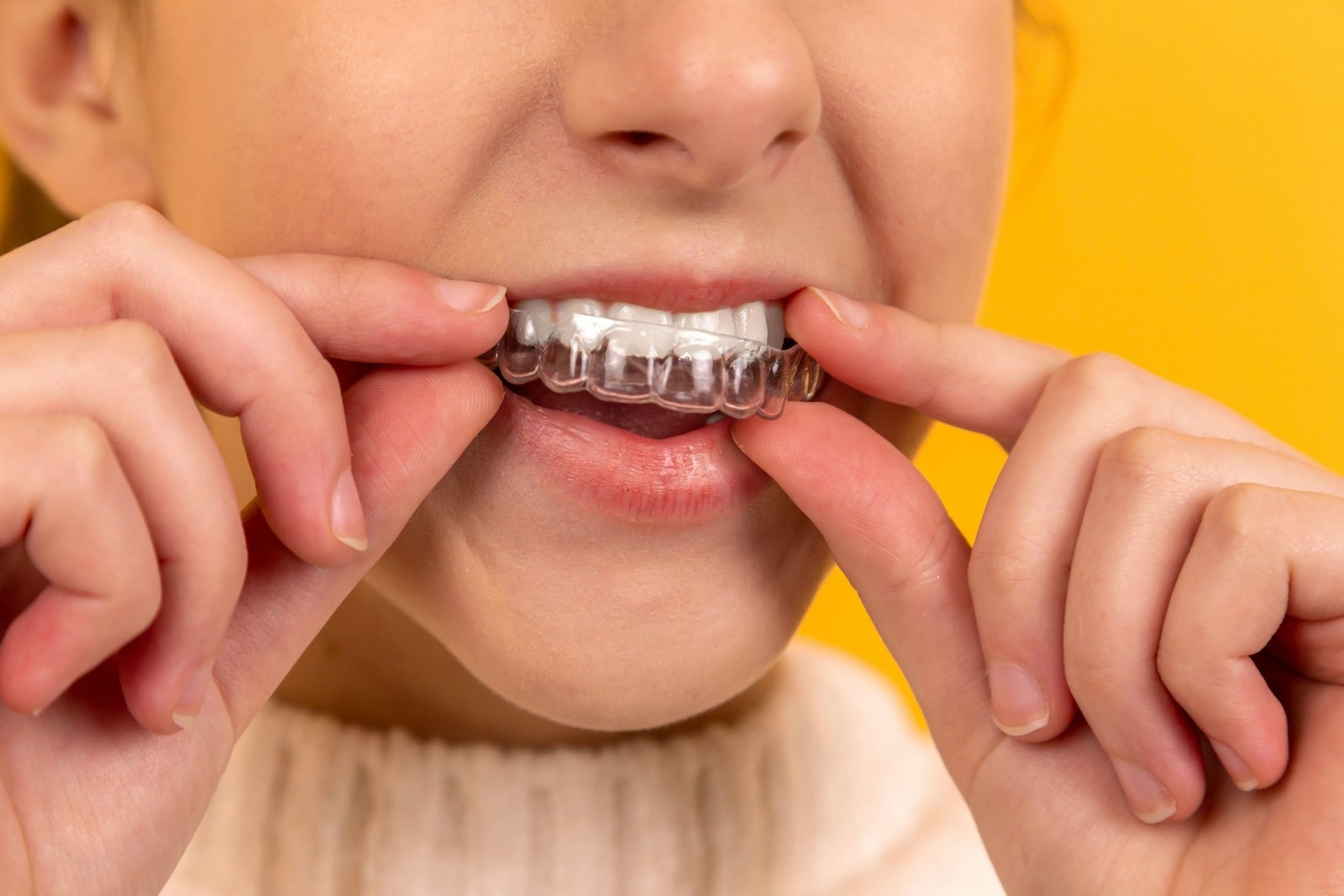
Clear aligners have transformed orthodontics — crooked teeth can now be corrected with a series of transparent, removable trays instead of metal braces. But they're not magic: success depends on the right case and consistent wear.
How Aligners Work
- 3D scan — your teeth are scanned (no messy impressions) and a software plan maps every movement
- Custom trays — you receive a series of aligners, each moving teeth ~0.25mm
- Wear 20–22 hours/day — remove only for eating and brushing
- New tray every 1–2 weeks — progressing through the series
- Retainers after — teeth have memory; retainers keep your result permanent
What Aligners Treat Well
- Crowded or overlapping front teeth
- Gaps between teeth
- Mild to moderate overbite, overjet, crossbite
- Relapse after previous braces
Severe skeletal issues or complex rotations may still need braces — your orthodontist will advise honestly.
The Honest Pros & Cons
Pros — nearly invisible, removable for meals and photos, easier oral hygiene, fewer clinic visits.
Cons — discipline is everything: skip wear and the trays stop fitting. Some pressure for 1–2 days with each new tray. Not ideal for patients who snack constantly.
Timeline & Cost in India
Most cases take 6–18 months. Indian aligner brands have made treatment far more affordable than a decade ago — your dentist can compare options for your case.
Want a straighter smile without braces? Book an aligner assessment with a verified orthodontist on Odento.
Typical Cost in India
Indian aligner brands start around ₹60,000–₹1.5 lakh; premium international systems (Invisalign) ₹1.5–3.5 lakh depending on case complexity.
Prices vary widely by city, clinic, material and case complexity — always confirm a written estimate before starting.
Questions to Ask Your Dentist
- Am I a good aligner case, or would braces work better for my bite?
- How many trays and months is my estimated plan?
- What happens if I lose a tray?
- Are refinements and retainers included in the quoted price?
Trusted external resources
Odento procedure guides are educational, not a substitute for an examination — always consult a qualified dentist for your specific case.


Responses (0)