


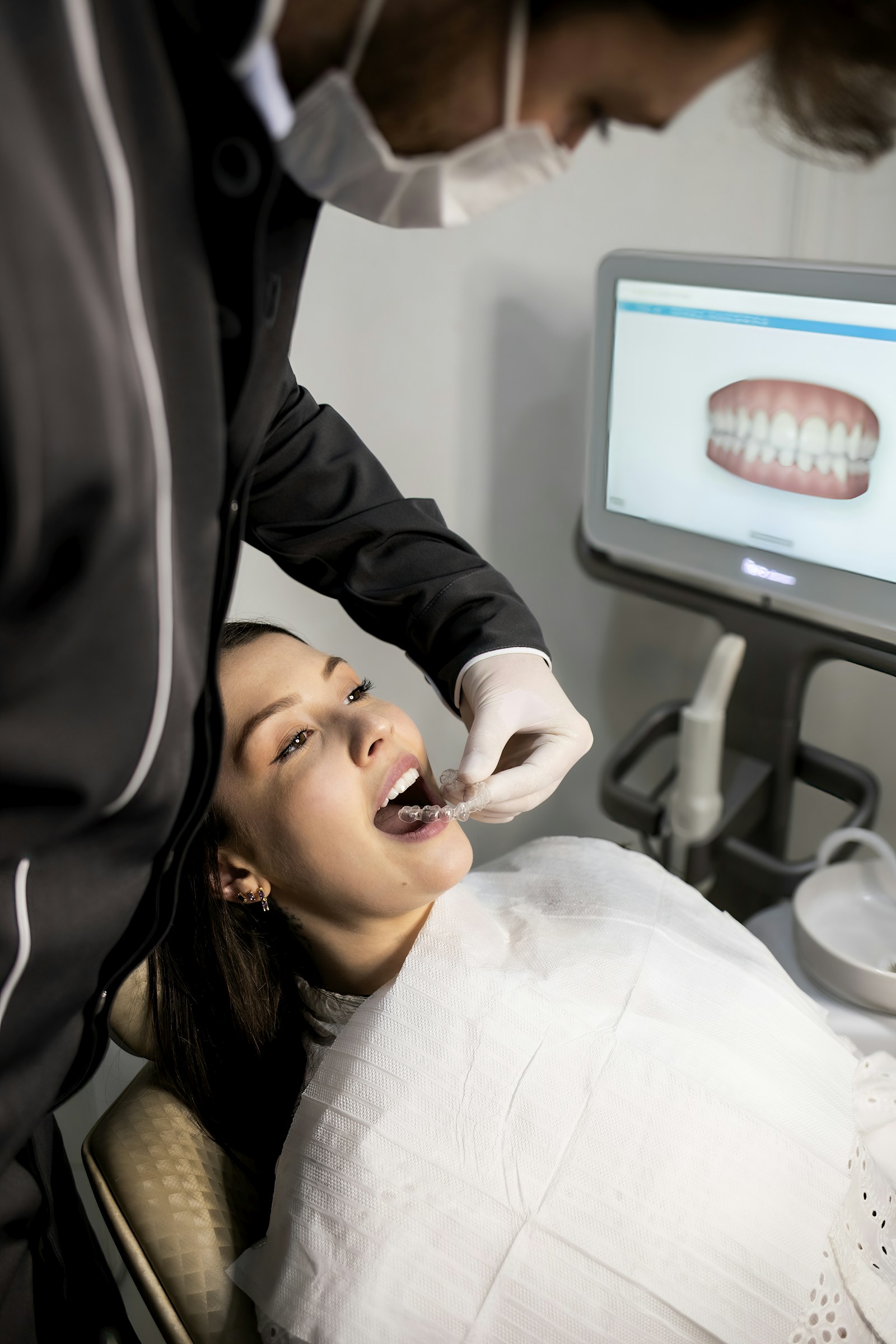
No matter how well you brush, plaque mineralises into calculus (tartar) in areas your brush can't reach — behind lower front teeth, around molars, below the gumline. Only professional scaling removes it.
What Happens During Scaling & Polishing
- Ultrasonic scaling — vibrations flush out tartar above and below the gumline with water spray (20–40 minutes)
- Hand scaling — fine instruments finish the areas ultrasonic tips miss
- Polishing — a soft cup and paste remove surface stains and leave enamel smooth so plaque grips less easily
- Optional fluoride/desensitizer — strengthens enamel and calms sensitivity
Does It Hurt? Does It Loosen Teeth?
- Mostly it's vibration and water — mildly ticklish, sometimes sensitive where gums are inflamed
- Cleaning does NOT loosen teeth — it removes the tartar that was falsely splinting already-loose, gum-diseased teeth. If they feel loose afterwards, the disease caused it, not the cleaning
- Mild sensitivity for a day or two is normal and settles
How Often?
- Every 6 months for most people
- Every 3–4 months if you have gum disease, diabetes, braces, or heavy tartar build-up
- Smokers and coffee/tea-heavy drinkers stain faster — polishing keeps it cosmetic, not permanent
The Bigger Payoff
Regular scaling is the single most cost-effective dental habit: it prevents gingivitis progressing to periodontitis — the disease that quietly loosens teeth in adults. An hour a year of prevention beats years of treatment.
Overdue for a cleaning? Find a verified dentist near you and book a slot on Odento.
Typical Cost in India
Scaling & polishing ₹800–₹3,000; deep cleaning (SRP) ₹3,000–₹10,000 depending on quadrants treated.
Prices vary widely by city, clinic, material and case complexity — always confirm a written estimate before starting.
Questions to Ask Your Dentist
- Any signs of gum disease I should know about?
- What areas am I missing with my brushing/flossing?
- How often should I get cleaned given my build-up rate?
- Any early cavities worth watching or treating now?
Trusted external resources
Odento procedure guides are educational, not a substitute for an examination — always consult a qualified dentist for your specific case.


Responses (0)